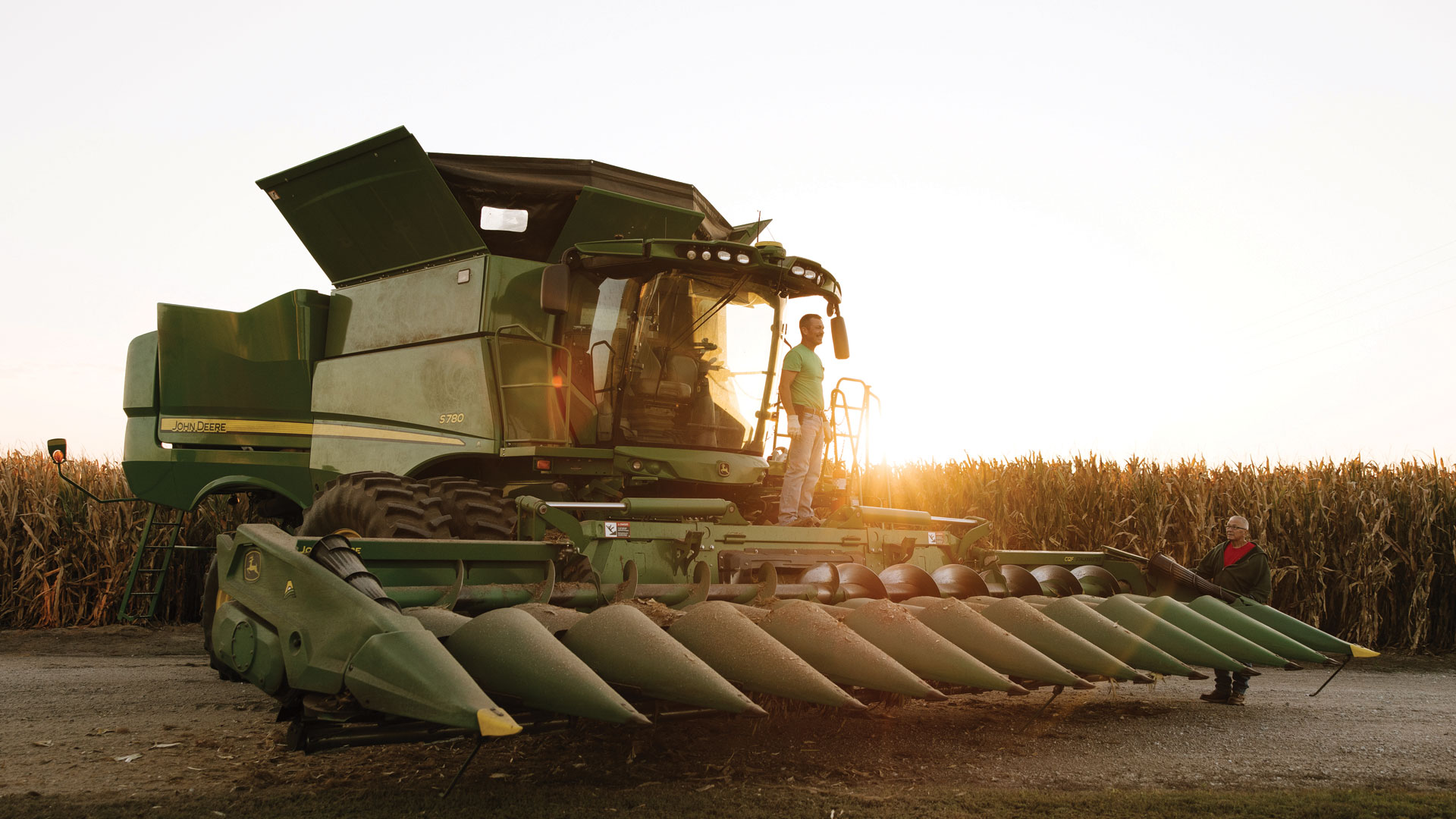
Across much of central Nebraska, farmland adjoins towns, communal waterways and residential areas. Because what happens on the land affects everyone, open communication between producers, neighbors and communities is extremely critical.
Nebraska’s Natural Resources Districts (NRDs) are local, community-based government agencies that manage and protect land and water. While often thought of as “regulators,” NRDs frequently serve as facilitators, bringing people together to discuss water quality, irrigation and erosion control, ensuring that decisions are made locally by those who understand the region.
Stewardship Before Regulation
Lyndon Vogt, general manager of the Central Platte Natural Resources District, which stretches from the Lincoln-Dawson county line near Gothenburg to Highway 81 near Columbus, emphasizes education, incentives and partnerships over enforcement.
“When it comes to regulation and stewardship, our goal is stewardship,” he emphasized. “Regulation is expensive for the producer and for us as a regulator. We put a substantial amount of money into education and cost-share programs so that regulation isn’t necessary.”
This philosophy is not about avoiding responsibility. Instead, it reflects a belief that when producers, communities and local leaders work together early, concerns can be addressed before stricter measures are needed. This proactive approach encourages thoughtful stewardship that protects both corn farmers and the public.
Decisions Guided By Diverse Voices
Oversight in Vogt’s district comes from the 21-member board made up of farmers, ranchers, business owners and community members. Board members live side-by-side with their neighbors in these communities, so they share both the rules they help create and the accountability that comes with them.
“About 60% of my board members are farmers and ranchers,” he said. “Our rules are managed by the people who live with them.”
That mix of backgrounds brings multiple perspectives to every decision. Farmers understand the realities of corn production. Business leaders and residents bring community concerns. Together, they help shape policies that reflect both agricultural realities and community priorities.
“You can’t make decisions that affect other people’s livelihoods behind closed doors. Our board meetings are all advertised and open to the public,” Vogt noted. “It’s local control at its best.”
Using Technology And Data To Improve Outcomes
Water management remains central to stewardship in a heavily irrigated region.
“Crops use the amount of water they need. But modern irrigation systems can reduce pumping,” Vogt explained. “We’re much more concerned about water quality than we are water quantity, especially in areas where excess nutrients can move quickly into groundwater.”
Water quality cost-share programs and technical assistance offer producers valuable support to implement improvements that benefit everyone.
Data is also a critical component to stewardship initiatives. The NRD requires producers to submit an annual crop report form, which must include soil- and water-sampling results. This data helps farmers and regulators work from the same baseline while giving producers actionable insights to refine practices and minimize unnecessary losses.
“Our goal is improvement,” Vogt emphasized. “When we educate producers, they educate us, too.”
Working With Neighbors Toward Sustainability
Vogt explained that effective stewardship relies on clear communication among neighboring landowners, especially as land use evolves and diversifies. Agricultural properties may share boundaries with specialty growers, organic farms, beekeeping operations, or small parcels owned by individuals outside the farming community.
When concerns arise about drift, runoff or certification risks, districts encourage neighbors to work things out directly whenever possible, preserving trust and mutual respect.
“When we hear a complaint, the first thing we ask is, ‘Have you talked to your neighbor yet?’” Vogt said. “If you want to have a relationship with your neighbor, you best be talking to them before you have a regulator talk to them for you.”
A Long-term Commitment
Most conservation work happens quietly, yet its impact is lasting.
“Our producers are trying to make a living the best way they know how,” he said. “We’re here to help them.”
By investing in education, data and collaboration, communities create systems where responsibility becomes the norm. In this model, regulation remains an important safeguard, but strong stewardship, built on trust and shared effort, helps ensure that it is used thoughtfully and sparingly.
“Our goal is to keep our producers in business,” he said. “It always comes back to stewardship.”
Jump To…
Related Posts
One State, Many Farmers: Practice Sustainability Across Nebraska
From the Missouri River to the Wyoming border, Nebraska stretches across hundreds of miles of changing soils, climates and growing conditions. To outsiders, it may look like one continuous agricultural landscape. But farmers know [...]
Farming With Purpose: Smart Fertility On Dryland Acres
Dryland corn farming, where crops depend entirely on rainfall rather than irrigation water, has always been an exercise in judgment. Without the predictability of irrigation, farmers make real-time decisions based on weather, soil conditions [...]