
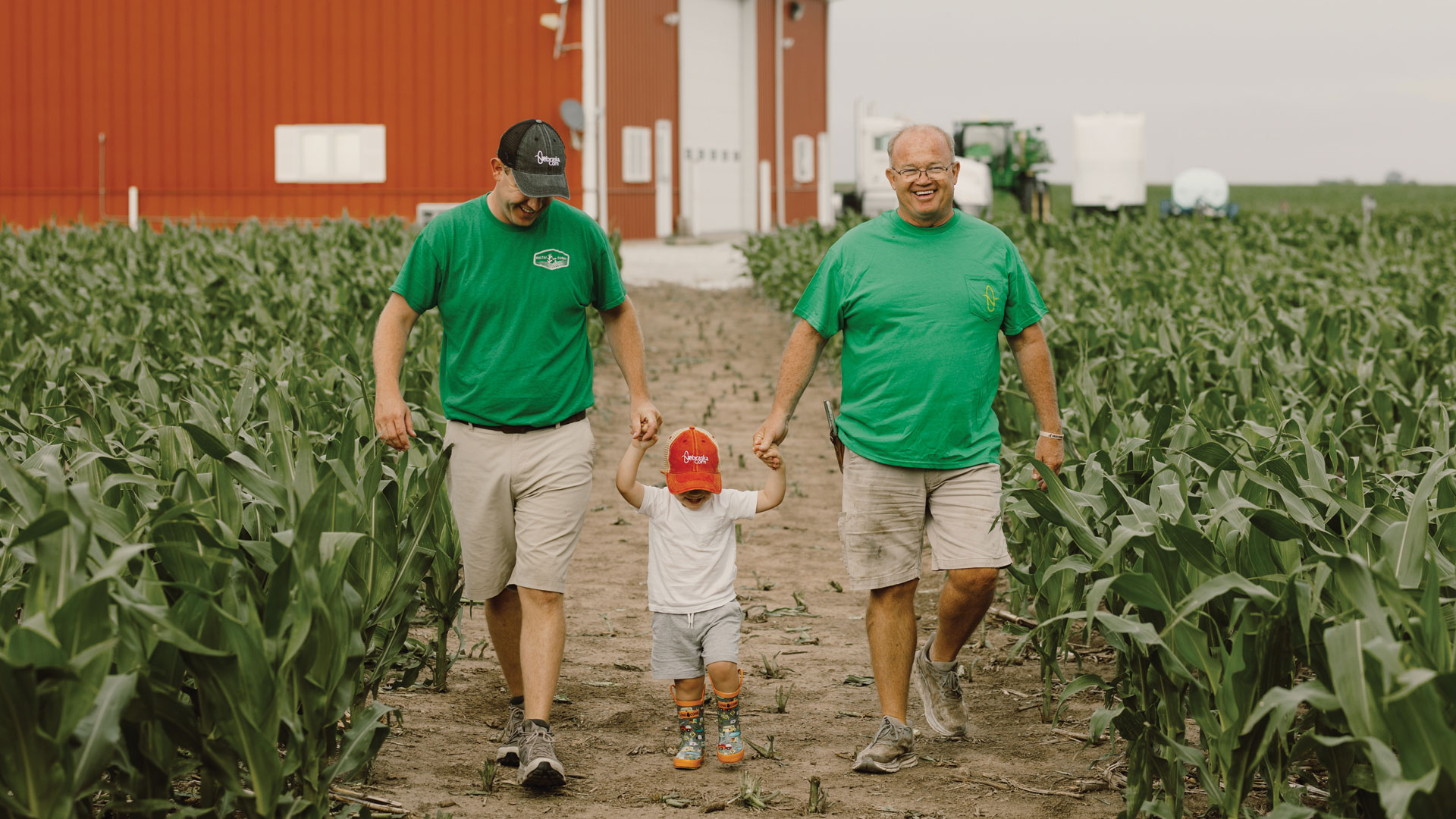
In south-central Nebraska, where Hamilton County’s gravel roads weave between seas of corn, Nate Goertzen carries on a farming legacy with his father and sons on the same land his family has tended to for 147 years, a legacy rooted as deeply in faith and stewardship as it is in soil.
For the Goertzens, farming has never been just about raiscing crops. It has always been about caring for what’s been entrusted to them by protecting the land, the water and the community that depends on it.
The Goertzens’ story began in 1878, when Nate’s great-grandfather immigrated to Nebraska, opened a hardware store in Henderson and bought a quarter section from the railroad. From there, the farm continued to grow, shaped by generations who believed their role was not to take from the land, but to leave it better than they found it.
“This yard was purchased in 1936 for my grandma and grandpa, and my parents have lived here since 1972. I was born here, grew up here,” Goertzen says proudly, standing near the grain bins that have been part of the farm for generations.
A Family Affair
Growing up, Goertzen always assumed that farming was his future and that caring for the land would be part of his calling.
“I got started with Grandpa in a garden, and I learned about planting, watering, cultivating and fertilizing. Then I’d come home from school, go out to the field at harvest time, ride in the combine and see the corn going into the trailer.”
Goertzen’s first major farming milestone came in fifth grade, when his dad gave him the keys to their John Deere 4020 tractor so he could bring in a load of corn.
“That was a huge experience,” he recalls. “I thought if I was able to do that, I could do the next thing. Maybe I could actually drive a tractor in the cornfield.”
To this day, farming and family are inseparable. Goertzen’s father, now 75, is still the go-to engine builder, keeping equipment running efficiently and responsibly.
“My dad still does what he loves to do. He is a big part of this operation,” he says.
Goertzen’s sons Trenton and Trevor have also become heavily involved in the family business, running the grain cart and handling maintenance and irrigation.
Son Trenton runs the grain cart while son Trevor handles maintenance and irrigation.
“I’ve always been on the farm. I’ve always had my hands dirty, from picking up a pipe to collecting corn to collecting dirt,” Trenton says. “I’m excited to keep doing what I love.”
In addition to teaching his sons how to run a farm, Goertzen has instilled in them the belief that success isn’t just about profits, but about faith and family.
“We’re not guaranteed this. We just thank the Lord for giving us each day to do this job. If I woke up the next morning, and it was all gone, we’d still have our family here on the farm,” Goertzen says.
Son Trevor agrees. “I’ve learned to be grateful for what we have,” he says.
Evolving the Family Farm
The Goertzens’ combination of white and yellow corn keeps the farm both productive and diverse. They’ve been planting white corn since the late 1980s and now devote about 60% of their acres to food-grade white corn for products like chips and tortillas, with the remaining 40% in yellow corn for ethanol. But while the 2 types of corn have been constant, farming has changed completely.
“When I started farming, all I wanted to do was drive a tractor,” Goertzen says. “Then came autosteer in about 2000. Now we can have straight rows even if dust is blowing over the cab and I can’t see,” he laughs.
“We’re also better at marketing now. We do better at bookkeeping. We do better at purchasing inputs. Time management is very important.”
That efficiency isn’t just about saving time. It’s about reducing waste, protecting resources and making thoughtful choices.
The Goertzens work closely with local agronomy specialists to map fields and conduct soil sampling for nitrogen, phosphate and sulfur, ensuring they apply only what’s needed, where it’s needed. But even with the help of data-filled spreadsheets, Goertzen has learned that challenges will still arise.
“It is okay to make mistakes,” he says. “Life is about the ups and downs. When the rain comes and the storms show up, when a 90 mile-per-hour wind lays your corn down, it’s going to be okay.”
All About Stewardship and Faith
That sense of steadiness, he says, comes from faith, as does his stewardship for the land.
“We try to minimize our chemical use. We try to minimize insecticides. It’s difficult to raise a crop because we’re fighting weeds all the time, but I want the food to be as healthy as possible. I want the water we drink to be as clean as possible. And I want to keep it that way for the next generation.”
His faith gives that responsibility perspective.
“We put seeds in the ground in April. We don’t make it grow. God makes that grow. We’re just being good stewards of what we’re given.”
At its heart, the farm is rooted in faith, family and gratitude. And Goertzen hopes to pass those values to his granddaughter, just as he did to his sons.
Son Trevor agrees that while learning to run an efficient business is important, the lessons he’s learned from working with his family will stick with him forever.
“When I think about working with my dad, I think about all the life skills he’s taught me: Don’t hurry. Just slow down. What he’s taught me, I hope I can pass on to my kids.”
Related Posts
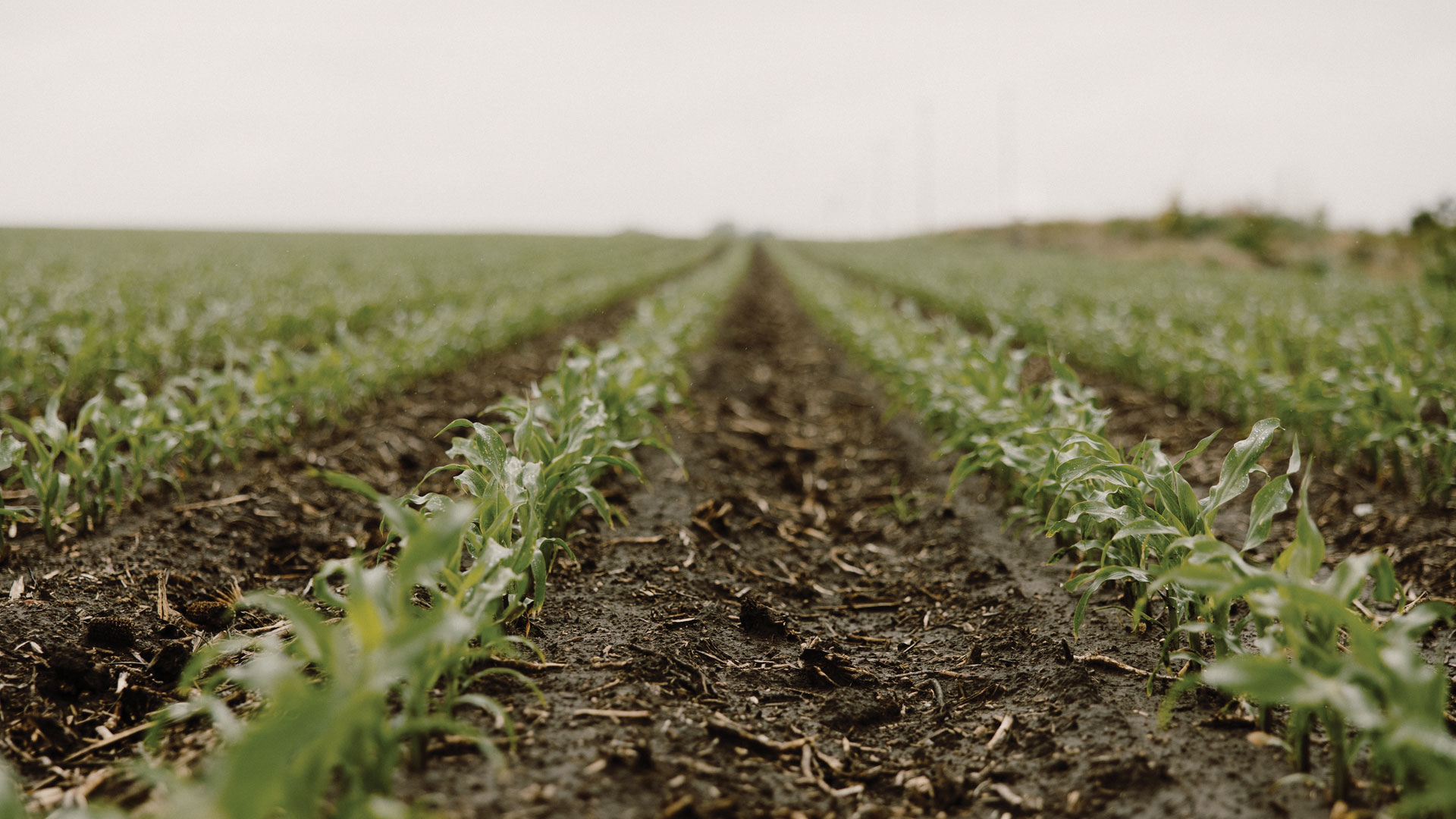
Across much of central Nebraska, farmland adjoins towns, communal waterways and residential areas. Because what happens on the land affects everyone, open communication between producers, neighbors and communities is extremely critical. Nebraska’s Natural Resources [...]
From the Missouri River to the Wyoming border, Nebraska stretches across hundreds of miles of changing soils, climates and growing conditions. To outsiders, it may look like one continuous agricultural landscape. But farmers know [...]
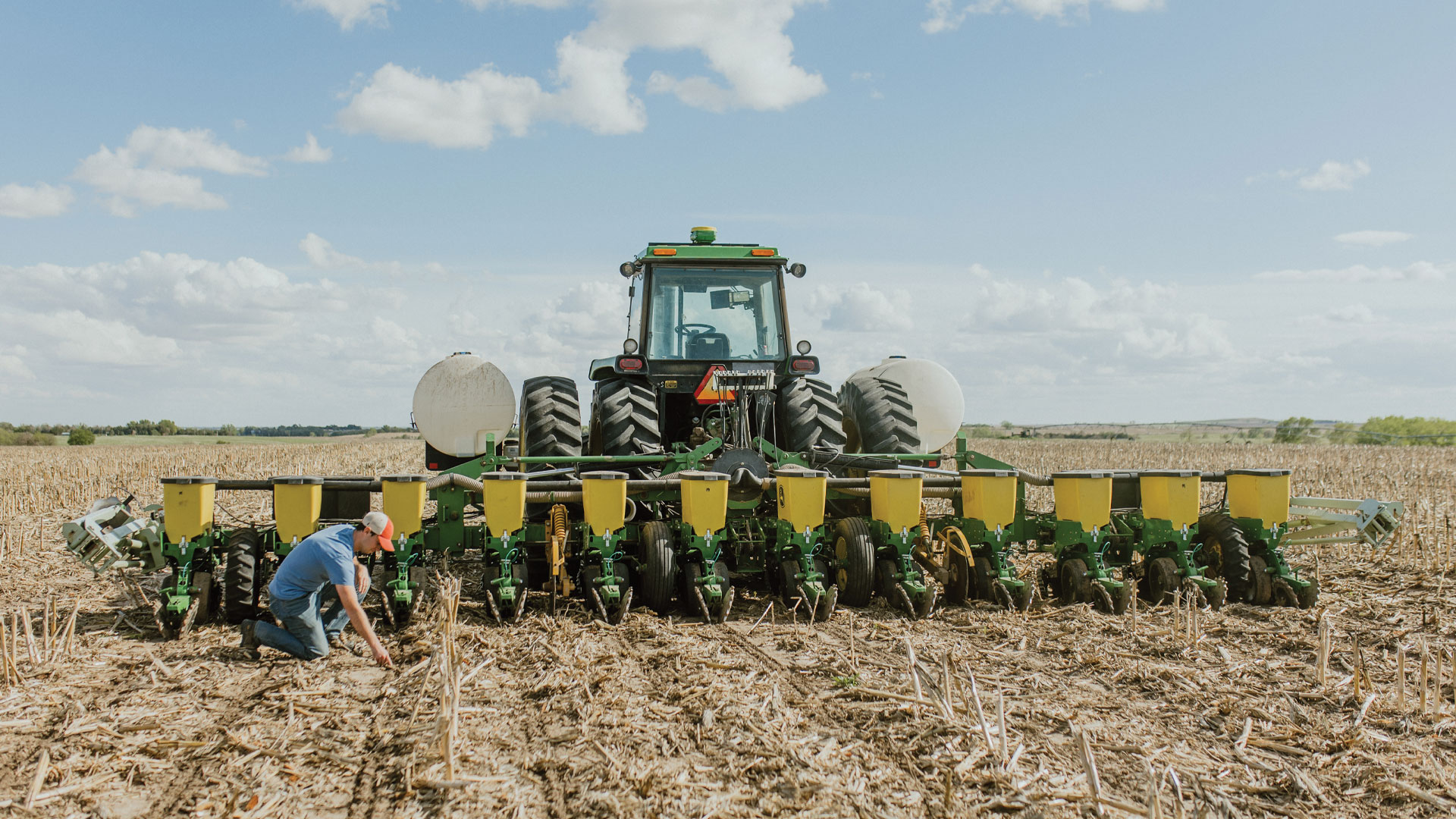
Dryland corn farming, where crops depend entirely on rainfall rather than irrigation water, has always been an exercise in judgment. Without the predictability of irrigation, farmers make real-time decisions based on weather, soil conditions [...]