
Dryland corn farming, where crops depend entirely on rainfall rather than irrigation water, has always been an exercise in judgment. Without the predictability of irrigation, farmers make real-time decisions based on weather, soil conditions and risk. Once the season begins, many of those choices can’t be reversed, making timing and precision especially critical. Few decisions carry more weight than fertility management, which affects not only yield but soil health years down the road.
Today, many dryland farmers are rethinking not just the amount of fertilizer they use, but when, where and how they apply it. The result is a shift toward what many in agriculture describe as “smart fertility,” a more intentional approach that balances productivity, environmental responsibility and long-term sustainability for communities and family farms.
Stewardship Begins With Intentional Decisions
At its core, smart fertility is about applying nutrients with precision and purpose.
“Smart fertility means being informed on the decisions you’re making ahead of time, whether it’s variable-rate prescriptions or targeted fertilizer blends,” said Ethan Zoerb, Sherman and Custer County farmer with a bachelor’s degree in environmental science. “We want to capture every dollar we’re investing in our field in our yields.”
It’s important to recognize that stewardship and profitability often go hand in hand. Research from the University of Nebraska, along with on-farm experience, shows that fertilizer rates and practices maximizing economic return typically minimize environmental loss.
“When producers maximize profitability, they typically minimize environmental impacts,” explained Dr. Richard Ferguson, professor of agronomy and horticulture at the University of Nebraska-Lincoln. “That balance between profitability and environmental impact is something we’ve been working toward for decades.”
The Challenges Of Dryland Farming: Rainfall, Risk And Timing
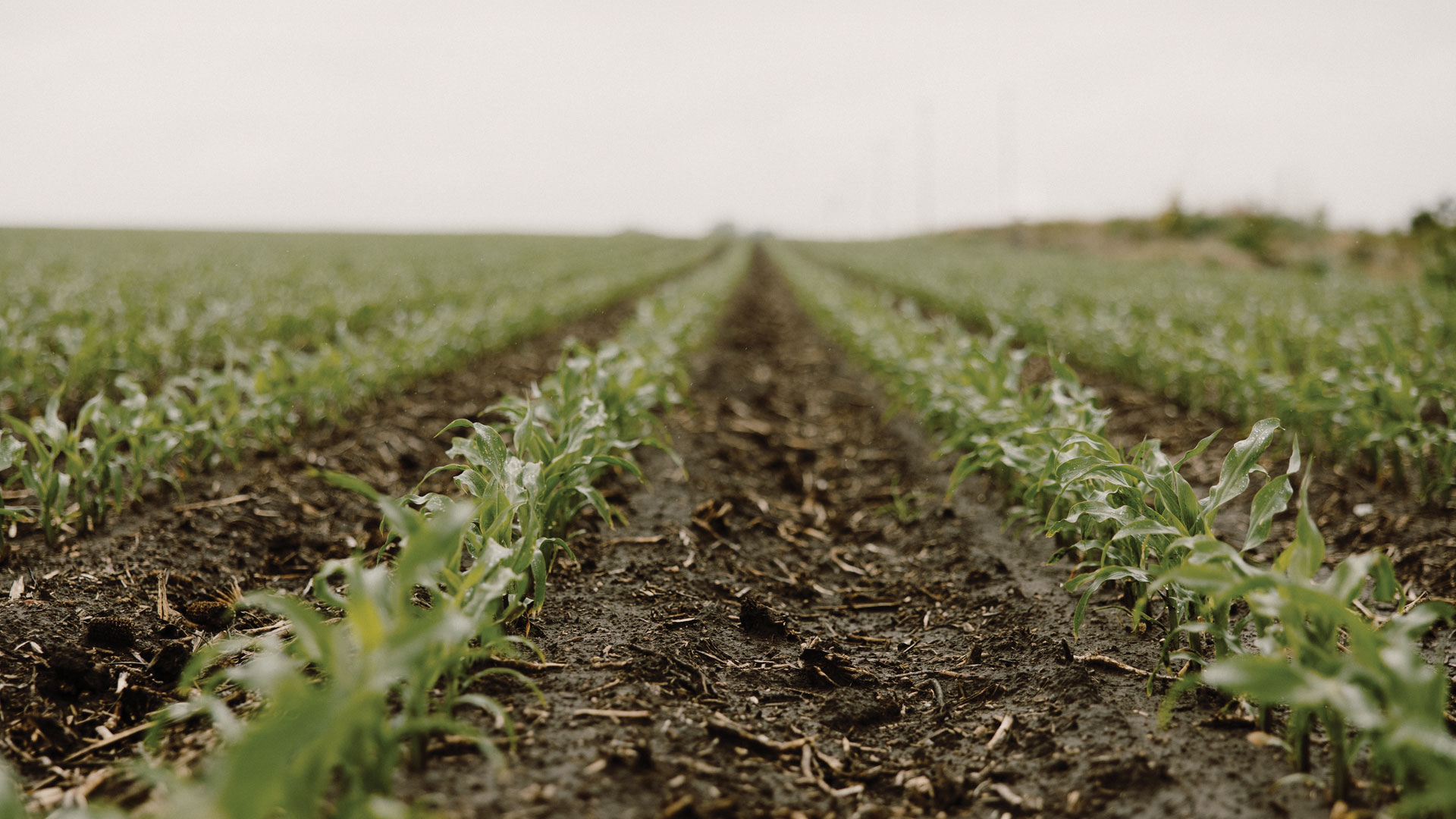
In dryland operations, rainfall can range from abundant to nonexistent within the same growing season, and even within the same field. Variability makes timing one of the most critical stewardship decisions a dryland farmer faces.
“If it’s a wet year, we may put more fertility on a field. If it’s dry, we know our potential is severely lowered,” Zoerb explained. “We vary our fertilizer passes on each field based on how much rain we’re receiving.”
Nitrogen is especially vulnerable in this environment. Apply too early or all at once, it can be lost during heavy spring rains or volatilized before it reaches the root. Apply too late, and yield potential may not be fully realized. Plus, unlike irrigated operations, dryland farms can’t rely on water to move nutrients into the soil when conditions change.
“The risk of nitrogen loss is highest during our high rainfall months of May and June,” Ferguson noted. “Applying nitrogen as close as possible to when it will be used by the crop is really critical in rain-fed systems.”
Fall and spring pre-plant applications still play a role, but the highest-value window often occurs after planting, when fertilizer can be applied closer to the time the crop needs it and when rainfall patterns are more predictable.
Split Application As Risk Management
One of the most widely adopted smart fertility strategies on dryland acres is split application. Rather than applying all nitrogen upfront, farmers divide applications between early- and in-season.
“We don’t want to put too much fertilizer on at one time. It’s expensive, and we don’t want to be wasteful with it,” Zoerb said. “The more you can spoon-feed throughout the process, versus a single application pre-plant, the better the yields are going to be.”
Split application also allows producers to adjust rates later in the season based on rainfall, crop conditions and yield potential. From a stewardship standpoint, split application reduces the amount of nitrogen exposed to loss during the most vulnerable periods.
Precision Application As A Sustainable Practice
Modern tools have made smart fertility more practical than ever. High-clearance applicators allow in-season passes later into the crop’s development. Y-Drops, which are flexible precision applicators that deliver fertilizer directly at the base of each plant, place nutrients closer to the crop’s active root zone rather than broadcasting them across the entire row width.
“We’re trying to get it as close to the plant as we can, so it’s easier for the crop to grab those nutrients,” Zoerb said.
Nutrients placed closer to roots are more likely to be taken up quickly, reducing the chance of loss. Stabilizers and inhibitors can also help farmers use less fertility more effectively by keeping nutrients available to crops longer and reducing loss to air and water.
“In rain-fed systems, anything applied to the soil surface should be protected. Inhibitors give you more time for rain to move fertilizer into the soil instead of losing it to the atmosphere,” Ferguson explained.
Why It Matters Beyond Yield
The growing focus on soil health may feel like a recent shift, but Ferguson notes that it’s built on decades of earlier work.
“If you go back about 30 years, some of our faculty here and with USDA in Lincoln were leaders in soil quality, trying to balance the management impacts on soil properties.”
While smart fertility practices weren’t widely adopted at the time, Ferguson said they’re gaining momentum today thanks in part to support from Natural Resources Conservation Service and farmer-led groups that help producers learn from one another.
“There are coalitions, groups and organizations of farmers now that help each other use these practices and talk about the benefits they’ve seen on their farms,” Ferguson said. “It’s not a fad.”
Many farmers view stewardship through a generational lens.
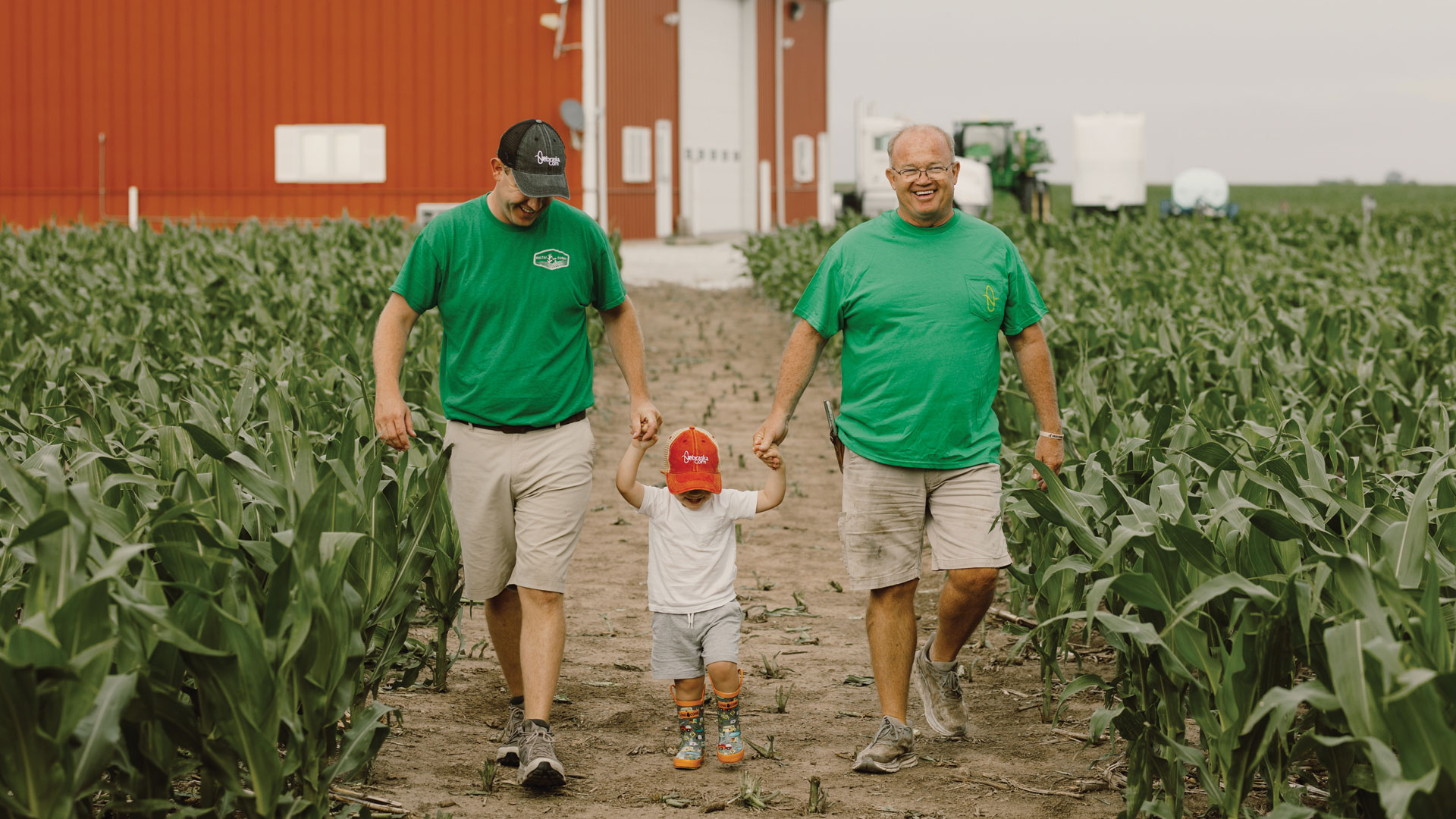
“If we are not taking care of the ground, we are not able to pass it on,” Zoerb pointed out. “We’re not going to put anything out there that harms our communities or our families. If I’m doing things that are detrimental to the soil, I can’t pass the farm on to my girls.”
There’s also a broader public dimension. Agriculture is deeply connected to rural economies, local schools and shared water resources. Responsible nutrient management helps build trust with neighbors.
“Most farmers strongly desire to be good stewards of the land,” Dr. Ferguson emphasized. “They have family connections to that land and want to care for it into the future.”
Farming With Purpose
Dryland farming will always involve uncertainty. Rain can’t be scheduled, and yields can’t be guaranteed. But through smarter fertility timing, better tools and intentional decision-making, dryland producers are finding ways to balance productivity with responsibility.
“We’re learning. We’re trying to be better every year,” Zoerb said. “Just trying to be the best stewards of the ground that we can.”
Related Posts
Across much of central Nebraska, farmland adjoins towns, communal waterways and residential areas. Because what happens on the land affects everyone, open communication between producers, neighbors and communities is extremely critical. Nebraska’s Natural Resources [...]
In south-central Nebraska, where Hamilton County’s gravel roads weave between seas of corn, Nate Goertzen carries on a farming legacy with his father and sons on the same land his family has tended to [...]
From the Missouri River to the Wyoming border, Nebraska stretches across hundreds of miles of changing soils, climates and growing conditions. To outsiders, it may look like one continuous agricultural landscape. But farmers know [...]