
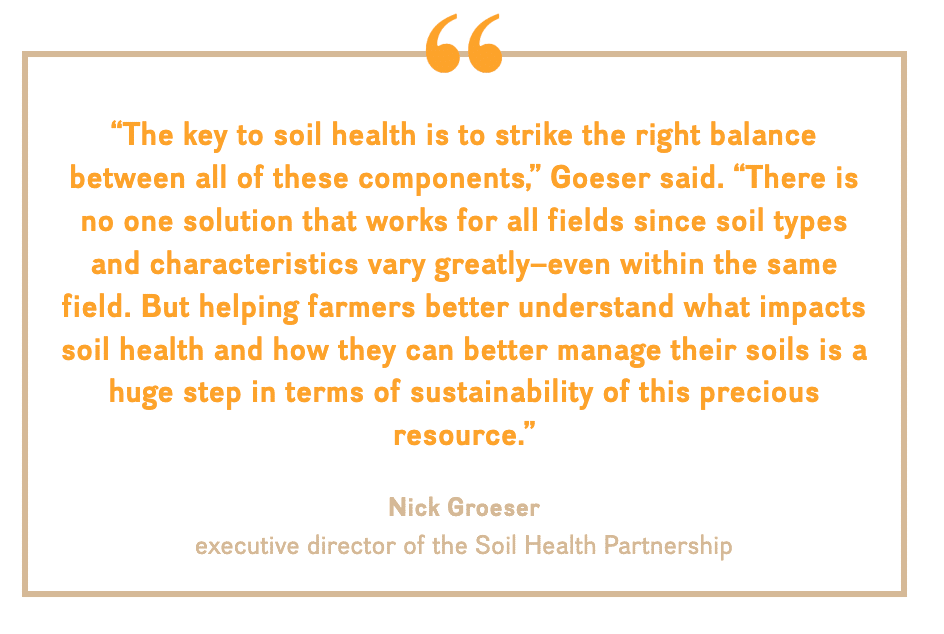
“The key to soil health is to strike the right balance between all of these components.”

Physical: The ability of the soil to hold water; the
overall stability of the aggregate; the physical nature of the soil in terms of its texture, structure and compaction.
Biological: The presence of beneficial bacteria and fungi; organic matter such as roots and decaying vegetation; living organisms such as worms and insects.
Chemical: Levels of fertility including nitrogen, phosphorus, potassium and micronutrients; soil pH; and the soil’s cation exchange capacity, a measure of the “electrical” environment within soil that determines its ability to retain water and nutrients.
About 45% of a healthy soil is actually porous space made up of air or water. That’s the space where plant root systems can grow and where beneficial microbes can thrive.

Related Posts

Across much of central Nebraska, farmland adjoins towns, communal waterways and residential areas. Because what happens on the land affects everyone, open communication between producers, neighbors and communities is extremely critical. Nebraska’s Natural Resources [...]
From the Missouri River to the Wyoming border, Nebraska stretches across hundreds of miles of changing soils, climates and growing conditions. To outsiders, it may look like one continuous agricultural landscape. But farmers know [...]

Agricultural carbon markets are a way for corn farmers to combat climate change while potentially unlocking new revenue streams. These markets allow farmers to earn carbon credits using climate-friendly sustainable farming methods—such as no-till [...]