
Every season, Nebraska farmers make hundreds of decisions that affect their yields, their profitability and the long-term health of their land. They decide when to irrigate, how much nitrogen to apply, whether to plant cover crops and which new technologies are worth trying.
For Jenny Brhel, helping farmers navigate those decisions has been her life’s work. As an extension educator with the University of Nebraska–Lincoln, Brhel has spent 23 years helping farmers solve problems and make informed decisions based on research conducted in their own fields.
“Farmers often look to their past experiences and ask, ‘What has worked and what hasn’t worked?’” Brhel said. “Tradition plays a role, but at the end of the day, most everyone is looking at what makes economic sense.”
One of the most valuable parts of Brhel’s work is conducting on-farm research. When a farmer has a question, Brhel helps design a scientific study using replicated test strips and yield data to generate answers under real-world conditions. Much of that research centers on what Brhel calls the management triangle: soil health, water quality and nitrogen-use efficiency.
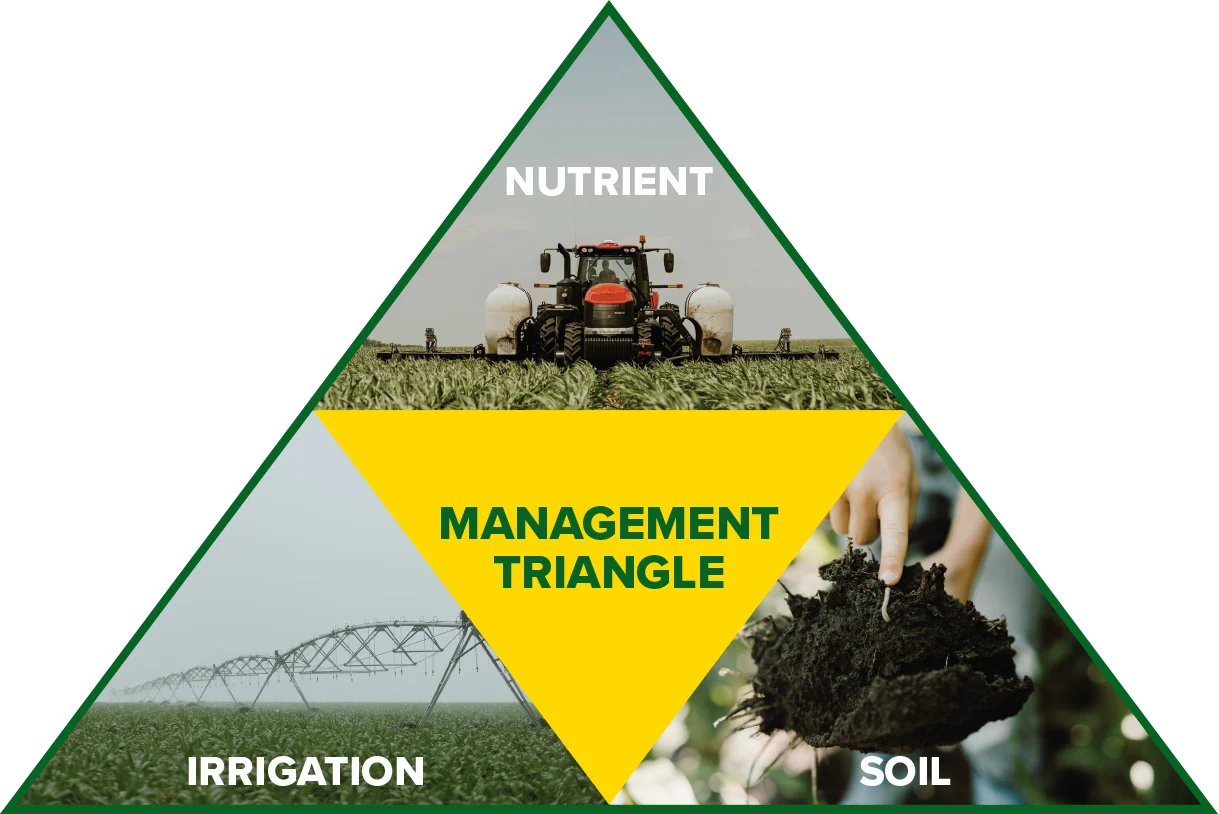
“These three things are all connected,” Brhel said. “Healthy soils with living roots and crop residue improve soil structure, allowing water to soak in more easily and remain available to crops longer. When irrigation and nutrients are applied more precisely, farmers can often maintain yields while reducing waste.”
That principle is at the heart of Brhel’s Nitrogen Challenge, which encourages farmers to initially apply a modest base rate of nitrogen and then use Sentinel AG, a satellite-based tool that analyzes crop conditions and recommends whether additional nitrogen is needed during the growing season.
The results have been eye-opening. Brhel said farmers in the program have consistently saved more than 40 pounds of nitrogen per acre without impacting yield, saving money while leaving less residual nitrogen in the soil.
Still, change is not always easy.
“Change is hard, and there is so much fear of doing the wrong thing,” Brhel said. “That’s why I encourage growers to start with just one field, rather than the whole farm.”
Brhel believes that willingness to try new techniques benefits more than the bottom line. It also helps farmers stay engaged and curious.
“When farmers are just trying some things and learning something new, it makes farming a little bit more fun,” she said.
Related Posts
When it comes to farming, trying something new can be a tough decision. A new irrigation strategy, lower nitrogen rate or different grain marketing plan could improve profitability, but it also comes with uncertainty. [...]
Nebraska farmers can carefully manage many factors that influence crop production, including seed placement, nutrient application and weed control. One critical variable, however, remains beyond their control: rainfall. For fifth-generation farmer Andy Jobman, irrigation is [...]
For farmer Matt Sullivan, coming back to Nebraska to work his family’s land was never just a career move. It was a dream he and his wife spent decades working toward. After growing up [...]