
Growing Nebraska Corn – PAST AND PRESENT
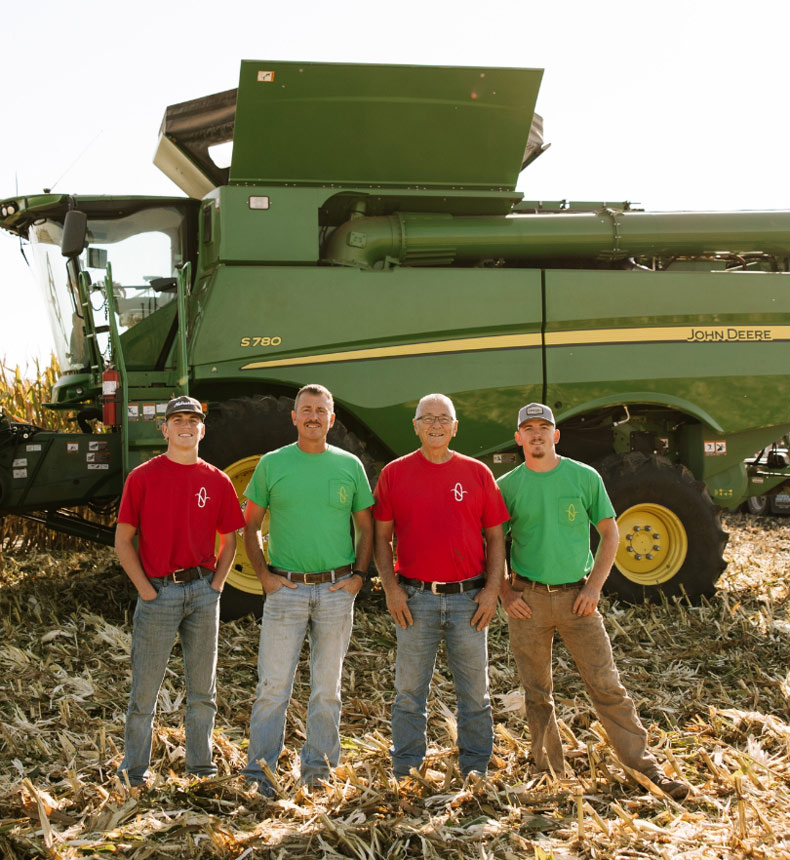
Each year, Nebraska farmers produce well over one billion bushels of high-quality corn. Nebraska is the nation’s third largest corn producer, behind only Iowa and Illinois.
We’re also second in ethanol production and distillers grain and first in cattle feed. Irrigation is one reason Nebraska consistently produces high volumes of corn. Nebraska has more irrigated corn acres than any other state, thanks in large part to the Ogallala Aquifer—a large underground water supply that lies beneath much of the state.
Drive across Nebraska during the summer and fall and you’ll see miles and miles of corn fields. But did you know that more than 99 percent of that corn is “field corn” and won’t directly end up on your plate for dinner or popped with a little butter and salt for a night at the movies? The other 1% of corn grown represents seven different types of corn.
Here are just a few of types of corn grown in Nebraska!
Field Corn Vs. Sweet Corn: What’s The Difference?

Field Corn
Also called “dent corn” — named for the distinctive dent that forms on each kernel as it dries. Makes up 99% of corn grown in Nebraska.
How it’s grown
- Grown until hard and fully dry
- Harvested in the fall
- Dozens of varieties — varying by growing season length, soil tolerance, and pest/disease resistance
Primary uses
- Livestock feed
- Ethanol fuel (from the starch)
- Distillers grains — animal feed made from the leftover protein and fat after ethanol production
- Exported domestically and around the world
Food products
- Corn syrup
- Corn flakes
- Yellow corn chips
- Corn starch & corn flour
- Not eaten directly — must be milled first
Sweet Corn
Also called “dent corn” — named for the distinctive dent that forms on each kernel as it dries. Makes up 99% of corn grown in Nebraska.
How it’s grown
- Grown until hard and fully dry
- Harvested in the fall
- Dozens of varieties — varying by growing season length, soil tolerance, and pest/disease resistance
Primary uses
- Livestock feed
- Ethanol fuel (from the starch)
- Distillers grains — animal feed made from the leftover protein and fat after ethanol production
- Exported domestically and around the world
Food products
- Corn syrup
- Corn flakes
- Yellow corn chips
- Corn starch & corn flour
- Not eaten directly — must be milled first
Specialty Corn
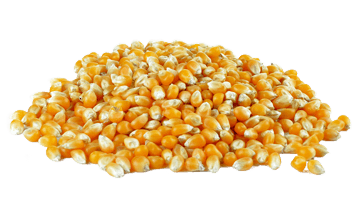
Popcorn
- Each kernel holds a small amount of water; heat turns it to steam until the kernel bursts
- Americans consume 16 billion quarts of popped popcorn annually — about 51 quarts per person
- Only ~220,000 acres grown in the U.S. each year
- Nebraska is the #1 popcorn-producing state, harvesting ~300 million pounds on 67,000 acres
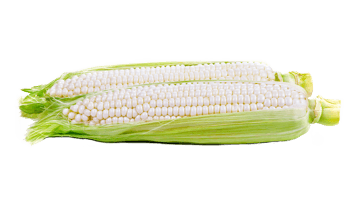
White Corn
- Features a harder-than-normal starch; used in corn chips, tortillas, and other food products
- Nebraska is one of the top U.S. producers, supplying food companies nationally and internationally
- High-starch varieties are ideal for ethanol production
- High-oil varieties are used for certain food processing and animal feed applications
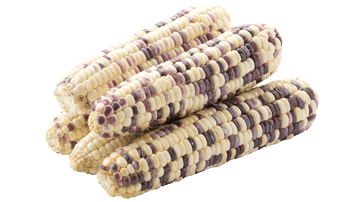
Waxy Corn
- Used as a thickener in food products and in adhesive manufacturing
- High-lysine varieties provide essential nutrients for livestock, especially pigs
- Floury corn — with large, soft kernels — is used to make Corn Nuts
Nebraska’s Golden Triangle
How Corn is Used for Food and Fuel
This prime agricultural region means corn farmers have solid yields of corn for its markets: ethanol and livestock. The two dozen ethanol plants across the state then provide renewable fuel and feed ingredients for the livestock industry.
In turn, the cattle sector provides high-quality, corn-fed beef to people throughout the country and around the world. In essence, Nebraska’s Golden Triangle increases the value of corn via renewable biofuel, distillers grains and meat production all within Nebraska’s borders, providing an incredible economic engine for the state.
By using more Nebraska corn in Nebraska, we’re capturing more of the corn’s value right here in the state. That’s good for the state’s economy, rural communities and Nebraska corn farmers.
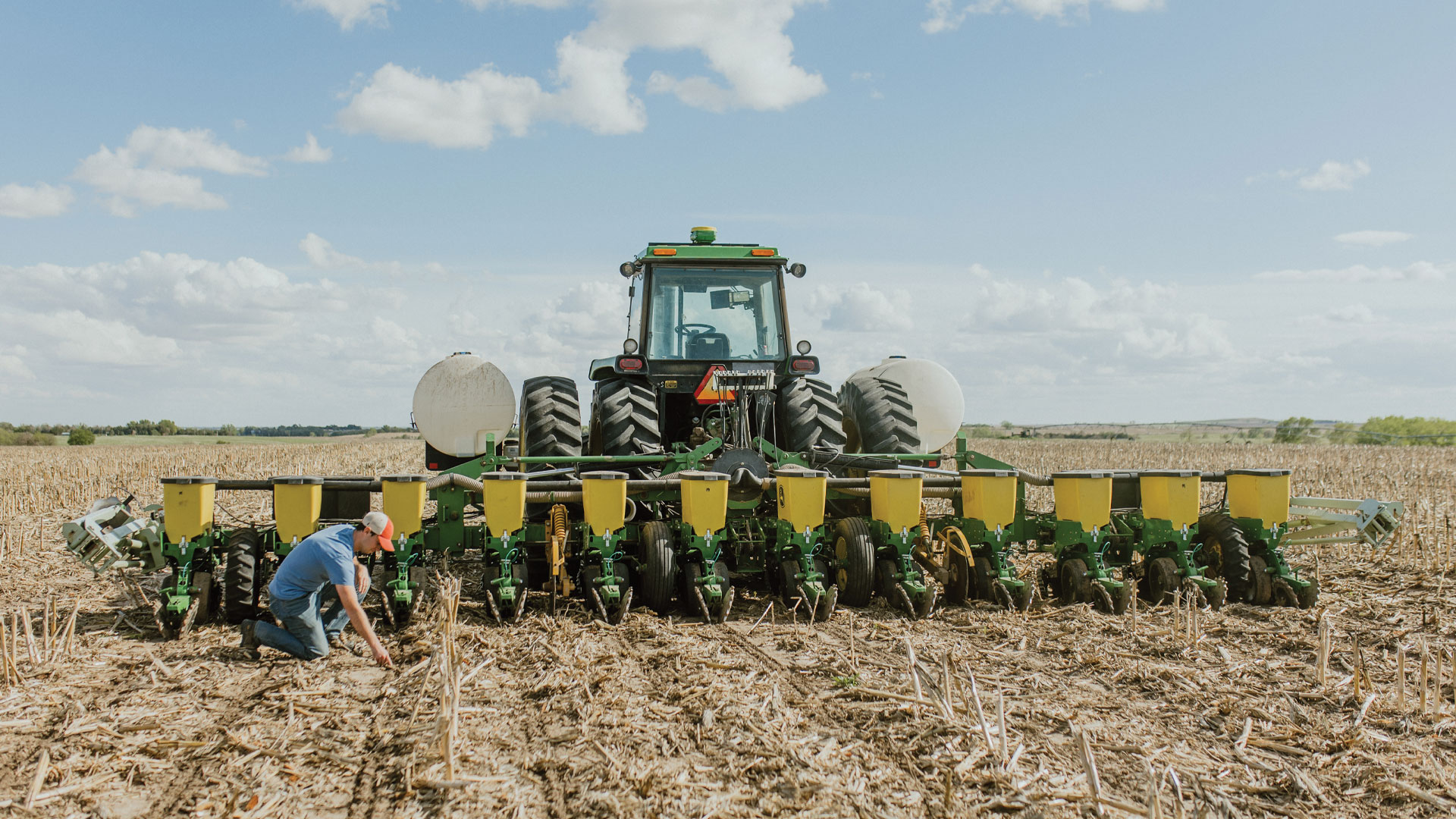
Growing and Harvesting Corn in Nebraska
Nebraska, like many Midwestern states that make up the “Corn Belt,” is well-suited for corn production. Average temperatures allow corn to flourish, and rainfall is plentiful in many parts of the state.
What sets Nebraska apart is the ability to supplement rainfall with irrigation water from the Ogallala Aquifer and reservoirs fed by snowmelt as far west as the Rockies. While approximately 70% of Nebraska corn receives some irrigation during the growing season — compared to less than 14% nationally — water is only applied when rainfall falls short.
Farmers have also become far more precise in how they apply water, using technology like watermark sensors and evapotranspiration gauges alongside University of Nebraska research — significantly reducing overall water use on irrigated acres.
Average Annual Rainfall
- East: 30 inches (76.2 centimeters)
- West: 18 inches (45.7 centimeters)
Planting
April 15 – June 5 · peak window April 25 – May 20
Harvest
September 10 – November 25 · peak window September 30 – October 30
Nebraska Corn Production History
Total Production
Yield Per Acre
| Year | Total Production | Bushels Per Acre Average |
|---|---|---|
| 1900 | 191,100,000 | 26 |
| 1920 | 242,891,000 | 33 |
| 1940 | 95,489,000 | 21 |
| 1960 | 333,438,000 | 51 |
| 1980 | 603,500,000 | 85 |
| 2000 | 1,014,300,000 | 126 |
| 2005 | 1,270,500,000 | 154 |
| 2010 | 1,469,100,000 | 166 |
| 2015 | 1,692,750,000 | 185 |
| 2020 | 1,790,090,000 | 181 |
| 2021 | 1,854,640,000 | 194 |
| 2022 | 1,455,300,000 | 165 |
| 2023 | 1,729,000,000 | 182 |
| 2024 | 1,802,920,000 | 188 |
| 2025 | 2,027,300,000 | 194 |
The History of Corn: Nebraska’s Rich Agricultural History
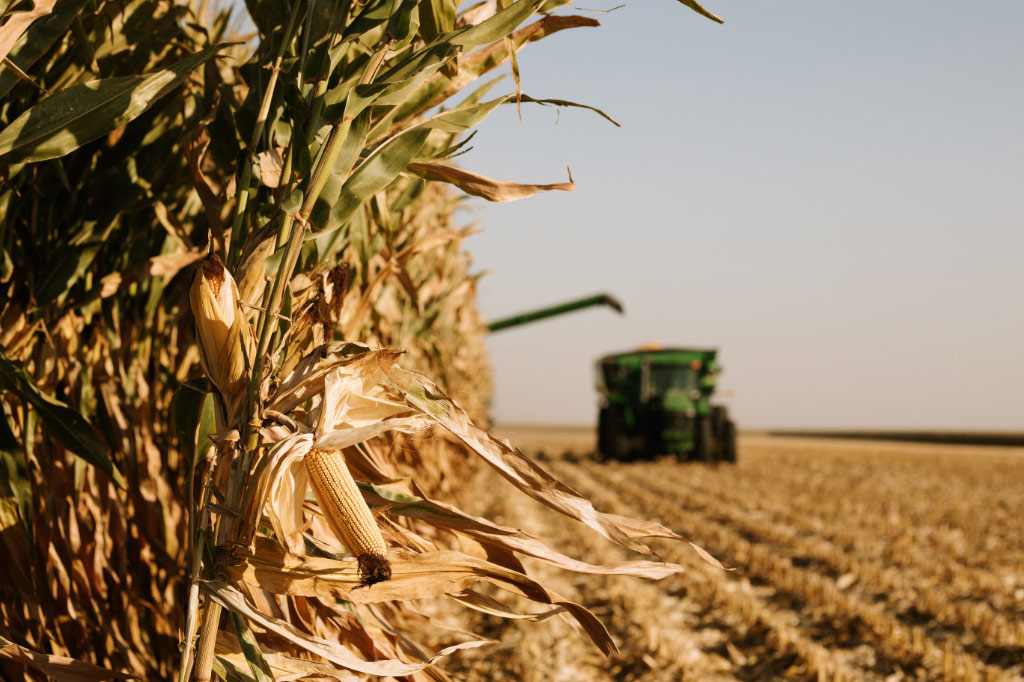
Corn has been a part of the region’s history for more than a 1000 years, long before Nebraska existed as a state. The crop was cultivated from its birthplace in Mesoamerica all the way north into what is now Canada, and from coast to coast. Humans and plants brilliantly adapted one to another; humans crafting their culture and calendar to meet the needs of corn crop and corn producing in return an essential food and feedstuff.
Native peoples began intensive corn horticulture in what is now Nebraska about 1,000 years ago, particularly along the southern and eastern regions rich with rivers and streams. Along with beans and squash, corn sustained tribal growth for long periods. By the early 1700s, tribes such as the Omaha, Pawnee, and Oto were living in villages of a thousand or more people. Here, they would raise crops that could yield around 30 bushels an acre.
With the opening of the Nebraska Territory in 1854, Euro-American farmers with their own corn cultures came west to find land of their own. They, too, learned that eastern and southern Nebraska was good corn country. They also learned that the different climate, rainfall, soil, weeds, and pests required different seeds and farming techniques. Trial and error along with knowledge produced and disseminated by the scientific community encouraged the growth of corn agriculture. By the late 1870s, corn crops were plentiful in Nebraska.
More corn produced by fewer people led to crop abundance that drove prices down, urging a demand for new value-added products to consume the surplus. Corn proved to be an excellent animal feed, particularly for beef, and by the mid 1880s Nebraska was a leader in livestock feeding. By the early 20th century, corn farmers and entrepreneurs alike invested in finding more uses for corn. As early as 1910, people looked to corn-based alcohol to replace kerosene in lamps and creatively, to serve as a motor fuel: ethanol.
Thank you to the Nebraska Historical Society for providing historical content.

Family Farms Continue to Grow and Innovate
As corn continues to grow, so does the sustaining innovation used to raise it. Many of Nebraska’s family farms got their start as part of the Homestead Act of 1862. Learn how they’ve continued to thrive as stewards of Nebraska corn.
Related Posts
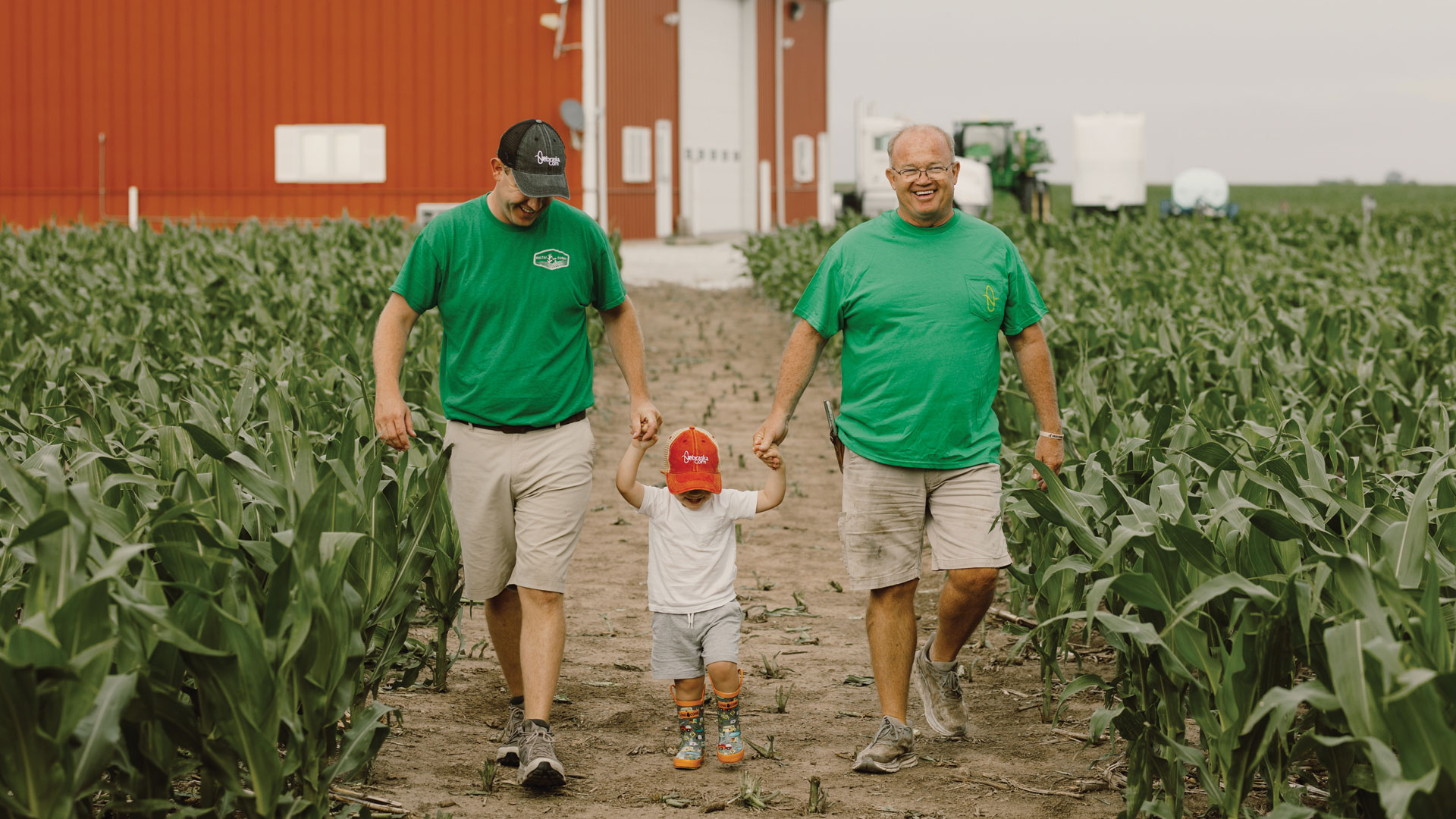
Across much of central Nebraska, farmland adjoins towns, communal waterways and residential areas. Because what happens on the land affects everyone, open communication between producers, neighbors and communities is extremely critical. Nebraska’s Natural Resources [...]
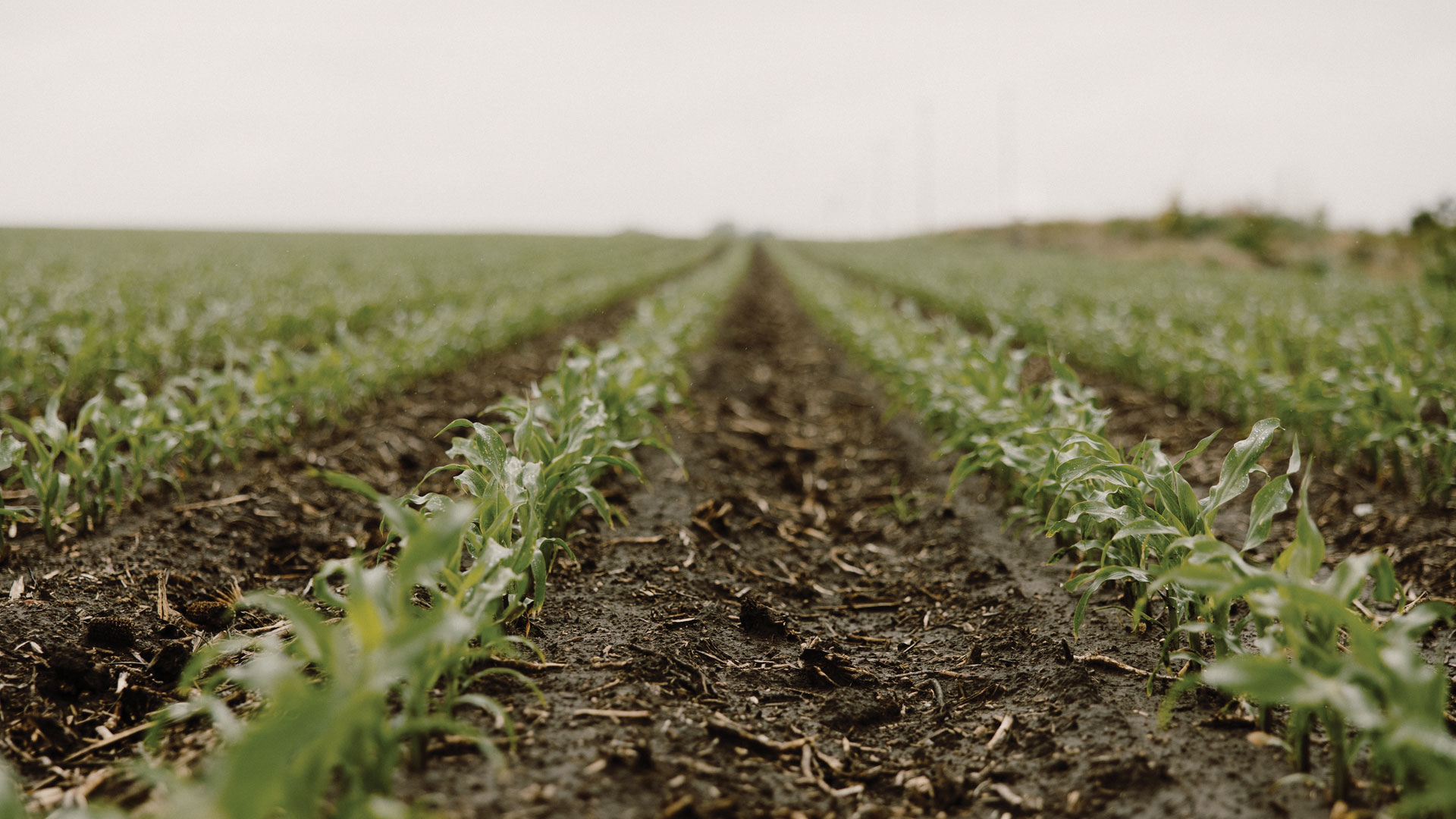
From the Missouri River to the Wyoming border, Nebraska stretches across hundreds of miles of changing soils, climates and growing conditions. To outsiders, it may look like one continuous agricultural landscape. But farmers know [...]
Dryland corn farming, where crops depend entirely on rainfall rather than irrigation water, has always been an exercise in judgment. Without the predictability of irrigation, farmers make real-time decisions based on weather, soil conditions [...]