
When it comes to corn farming, there are many common myths and misconceptions. From farming processes to technology, sit down with a Nebraska farmer to get the facts behind popular corn farming myths!
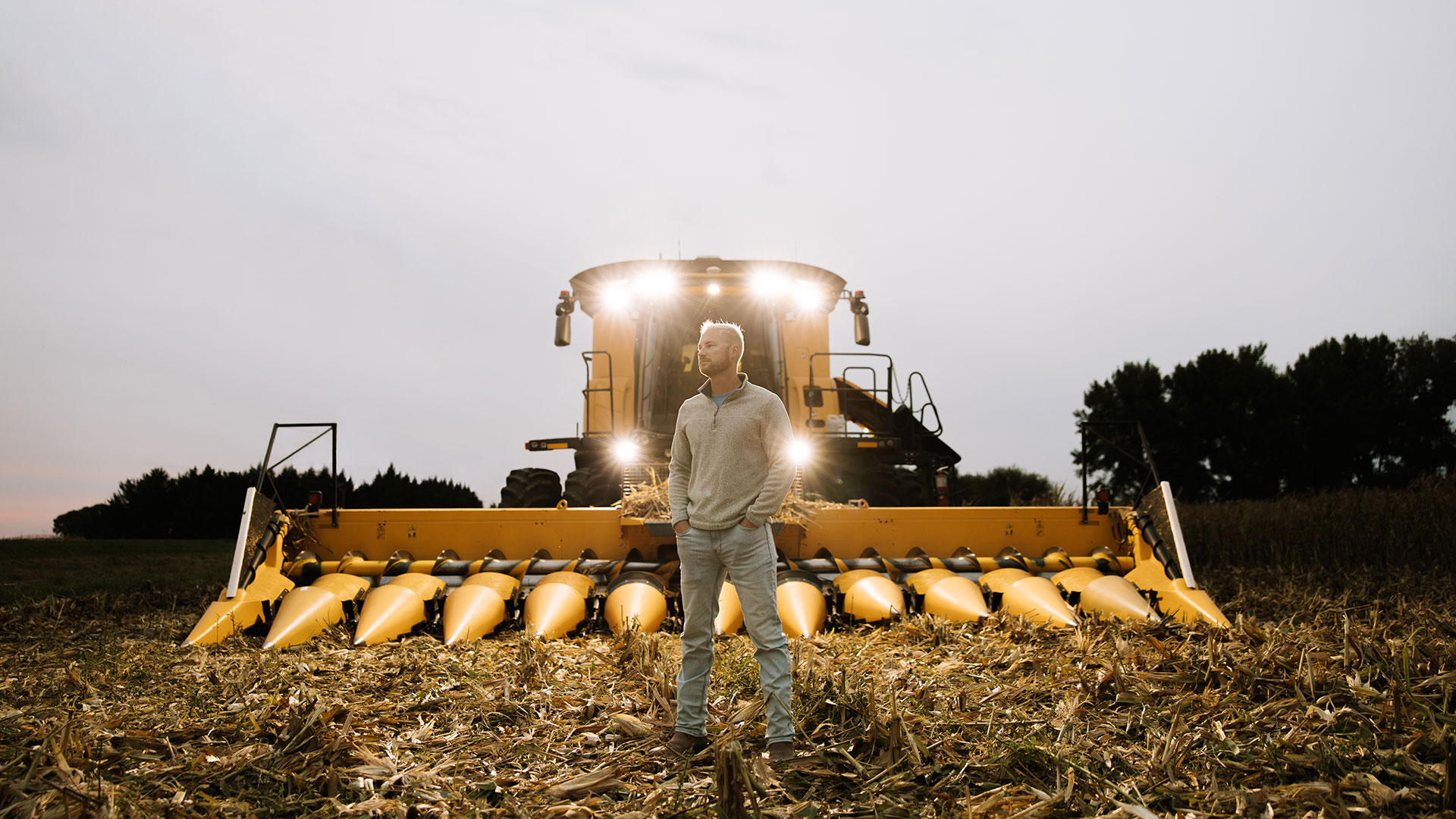
Matt Sullivan is a fourth-generation farmer growing corn and soybeans in Southcentral Nebraska. He runs his farm, Shamrock Farms, with his family, continuing a legacy dating back to the 1800s. With lifelong experience in the agricultural industry, Sullivan has heard a wide range of myths and was eager to share the truth behind them.
Knee High by the Fourth of July
You’ve probably heard the old saying about corn being “knee high by the Fourth of July”. While that may have been true at one point in time, corn plants are actually much taller by this time of the year due to modern farming innovations.
In Sullivan’s experience: “I would say most of the time we’re at V14 or V16 stage, sometimes even tassel by the Fourth of July depending on weather conditions and when we get it planted.” At this corn growth stage, the plant is approximately seven feet tall–far beyond knee height!
Farmers Aren’t Busy During the Winter
If you’ve ever wondered what farmers do in the winter, you’re not alone. Sullivan puts it well, saying: “There’s some people think, oh, yeah, you can work for about four weeks in the spring and four weeks during harvest and the rest of time, it’s just twiddle your thumbs, and that’s a total misconception.”
There’s equipment to maintain, strategies to plan, plenty of bookwork and much more going on behind the scenes. Corn farmers who also raise livestock are kept especially busy during the winter tending to their herds. Farming is a year-round job that takes hard work and dedication to succeed, and Nebraska farmers like Matt Sullivan are up to the task!
Seeding Rates Shouldn’t Vary
Some people have the misconception that seeing rates for corn plating shouldn’t vary much. However, with precision data, historical yield maps can shed valuable insights into how to vary seeding rates to increase yields. When it comes to varying corn seeding rates, Sullivan gives a great example: “A perfect for instance is, say, dry land ground. You not only have different soil types in a field, but you also have valleys and draws that, if you do get a rain event, are going to be wetter than the high areas. So, for instance, the top of some hills, we might have fairly low seeding rates. You get into the draws, we’ll push them close to irrigated based on historical yield.” Corn farmers must take a wide range of factors into account to determine ideal seeding rates for optimal yields.
GMO Myths and Misconceptions
There are many negative myths surrounding GMOs, but in realty GMOs are a safe and effective tool that provide a wide range of benefits to both farmers and consumers. One of the key benefits of GMOs Sullivan touches on is the ability to use fewer pesticides due to hybrid varieties having better resistance to common pests. Another key benefit of genetically modified crops is their potential to lower the cost for the consumer through their ability to increase yields. Simply put by Sullivan: “You’re able to grow a better crop and yield more, it’s all about being able to grow more on fewer acres.”
No-Till Results in Lower Yields
Sometimes called zero-tillage farming, no-till farming is a technique used to grow corn and other crops with minimal disturbance to the soil. No-till farming is a sustainable farming practice that provides several benefits such as improved soil health and reduced emissions. When asked about popular myths regarding no-till methods, Sullivan says: “Well, probably the biggest one is that if you have your no-till, you’re not going to get the yields that you can with conventional tillage. That has t been proven wrong.” With no impact on yields and so many benefits for the soil, no-till farming is a way for farmers to grow high-quality corn while also preserving natural resources for future generations.
When asked about protecting the land for those future generations, Sullivan says: “You want to keep the legacy continuing, it’s a long-term game. You’ve got to make sure that you’re profitable, that you can farm next year, but also you want to keep going for the next decade and decade after that and hopefully, my grandkids, they can say, this farm’s been in our family for 200 or 220 years. That’s the goal. You want to continue that legacy, and it’s very rewarding.”
Related Posts
How generosity and teamwork nourish a small farming community.
For fifth-generation Holdrege farmer Logan Reed, agriculture isn’t just about growing crops, it’s about growing community connections. Connections that were first forged nearly a century and a half ago. “My great-great-grandfather came over from Sweden [...]

Leaving city life behind, a young farmer cultivates community and conservation for generations to come.
Growing up in northwest Omaha, Morgan Wrich watched as the quiet cornfield behind her elementary school gave way to a concrete parking lot and a bustling Lowe’s, a clear sign of the city’s rapid growth. [...]