
Growing Nebraska Corn: History, Varieties and Uses
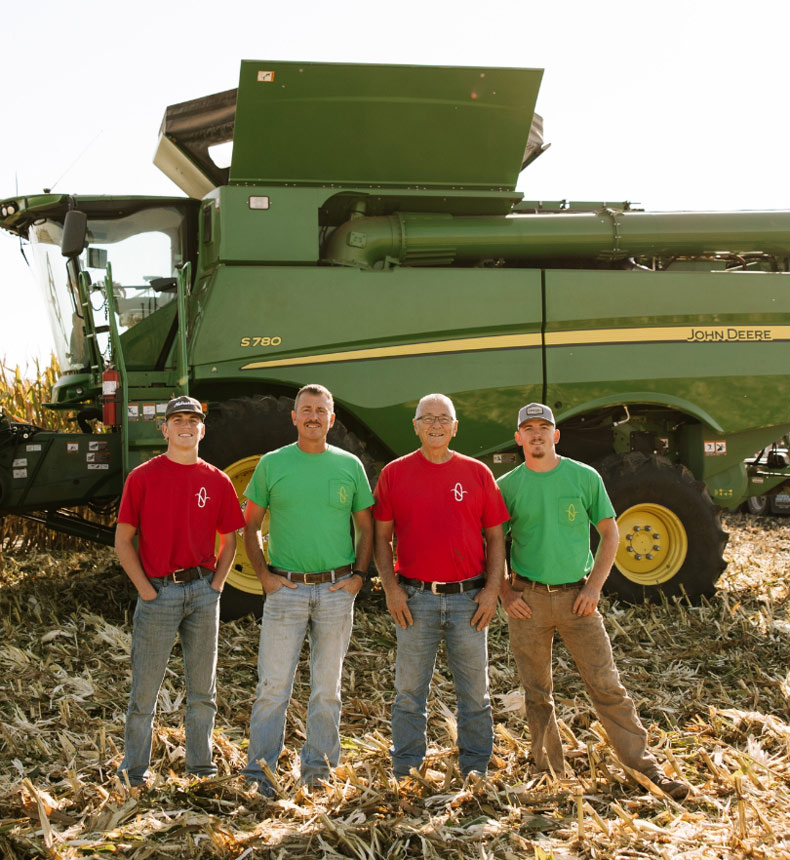
Corn is more than just a crop in Nebraska: it’s a way of life. Corn production in Nebraska shapes our economy, feeds livestock, fuels vehicles and supports communities across the state.
Each year, Nebraska farmers produce well over one billion bushels of high-quality corn, making Nebraska the third-largest field corn producer in the United States, behind only Iowa and Illinois. The state’s corn production is the foundation for an even larger impact.
Nebraska also ranks:
#1 in cattle on feed production
#1 in irrigated corn acres
#2 in ethanol production
#2 in production of distillers grain, a nutritious livestock feed.
So, what makes Nebraska such a powerhouse for growing corn? A big part of the answer is underground. Nebraska sits atop the Ogallala Aquifer, a vast underground water supply that stretches across much of the state. This natural resource, combined with innovative irrigation practices, allows Nebraska farmers to consistently produce some of the highest corn yields in the country.
Corn has played an important role in Nebraska’s history and economy for generations. Learn more about how corn became such an important crop in the state, the different types grown today and the many products and industries that rely on Nebraska corn.
What’s the Difference Between Sweet Corn and Field Corn?

Field Corn
Field corn is often called “dent corn” for the distinctive dent that forms on each kernel as it dries. It’s the classic big-eared, yellow corn grown in farm fields around the state.
In the Field
- Planted in spring and harvested in the fall once kernels are hard and dry
- Grown from dozens of field corn varieties, each suited to different soils and growing seasons
- Bred with built-in traits that help protect against insects, disease and drought
- Available in varieties with shorter or longer growing seasons to match Nebraska’s diverse climate
TOP uses
- Livestock feed for cattle, hogs and poultry across Nebraska and beyond
- Ethanol production, turning corn starch into a clean, renewable fuel for cars and trucks
- Distillers grains, a high-protein, high-fat animal feed made from the leftover kernel after ethanol production
- Exports to global markets, supporting trade and Nebraska’s agricultural economy
Understanding Specialty Corn
Specialty corn refers to the unique varieties of corn grown for specific uses beyond traditional field corn. Nebraska farmers grow a wide range of specialty corn varieties that supply food companies, snack makers and manufacturers across the country and around the world.
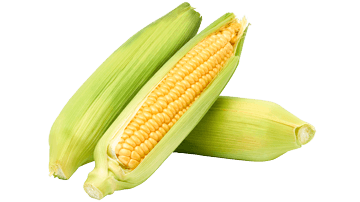
Sweet Corn
- Harvested in mid-summer while kernels are still tender, juicy and full of natural sugar
- Sold fresh as corn on the cob at grocery stores, farmers markets and roadside stands
- A staple at backyard barbecues, holiday meals and family dinners
- Canned and frozen for year-round enjoyment
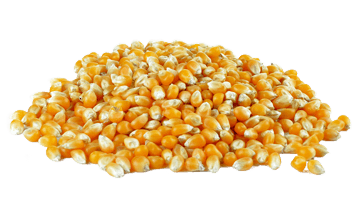
Popcorn
- Pops when the small amount of water inside each kernel heats up and expands until the kernel bursts open
- Can be made in the microwave, air popper or on the stove for a light, delicious snack
- Americans consume 14 billion quarts of popped popcorn every year—about 43 quarts per person
- Nebraska is the #2 popcorn producer in the United States, harvesting roughly 333 million pounds of popcorn annually
- Only around 220,000 acres of popcorn are grown nationwide annually
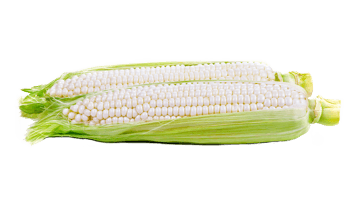
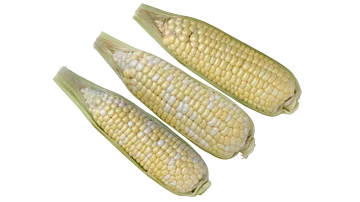
White Corn
- Features a harder-than-normal starch, making it ideal for corn chips, tortillas and other popular food products
- Nebraska is the top white corn producing state in the United States
- Grown for food companies across the country and exported to foreign markets
- Like field corn, white corn can be used for ethanol production
- Some varieties are bred with high oil content for specialty food processing and animal feed
Waxy Corn
- Waxy corn is used to thicken foods and make adhesives
- Like field corn and sweet corn, this high-starch corn is also ideal for ethanol production
- High-lysine corn provides valuable nutrients for animals like pigs
- Floury corn with large kernels is used to make popular snacks like Corn Nuts
Nebraska’s Golden Triangle: Corn, Cattle and Ethanol
From Field to Fuel to Food
Nebraska’s prime agricultural land does more than produce strong corn yields. It powers one of the most efficient agricultural systems in the country: Nebraska’s Golden Triangle. This interconnected network of corn, livestock and ethanol production turns every bushel of Nebraska corn into greater value for farmers, communities and the state’s economy.
It starts in the field, where Nebraska’s corn farmers consistently produce some of the highest yields in the nation. There are many uses for corn grown in Nebraska, but the two strongest in-state markets are:
- Ethanol production at the two dozen ethanol plants across Nebraska, creating clean, renewable fuel and valuable feed co-products
- Livestock feed, including distillers grains, that supports Nebraska’s thriving cattle industry and delivers high-quality, corn-fed beef to consumers across the country and around the world
How Corn is Grown in Nebraska: Climate, Rainfall and Harvest
Nebraska sits squarely within the Corn Belt; the Midwestern region best known for producing the majority of the nation’s corn. With ideal average temperatures, fertile soils and access to plentiful water, Nebraska offers ideal conditions in the country for growing corn.
What sets Nebraska apart from other corn-producing states is its ability to supplement natural rainfall with irrigation. Thanks to the Ogallala Aquifer and a network of reservoirs that capture snowmelt and rainfall from as far west as the Rocky Mountains, Nebraska farmers can deliver water to their fields exactly when the crop needs it. Nationally, only about 14% of corn acres are irrigated, compared to roughly 53% in Nebraska. And even though just over half of Nebraska’s corn acres get irrigated, those acres deliver about 70% of the state’s total corn production. Even so, water is only applied when Mother Nature needs a hand.
Today’s Nebraska corn farmers also use advanced tools like watermark sensors, evapotranspiration gauges and research from the University of Nebraska to apply water more efficiently than ever before. These innovations continue to reduce water use on irrigated acres year after year.
Nebraska’s Average Annual Rainfall for Corn Production
Rainfall varies significantly across the state, which is one reason irrigation plays such a key role in Nebraska corn production:
- East: 30 inches (76.2 centimeters)
- West: 18 inches (45.7 centimeters)
When is Corn Planted in Nebraska?
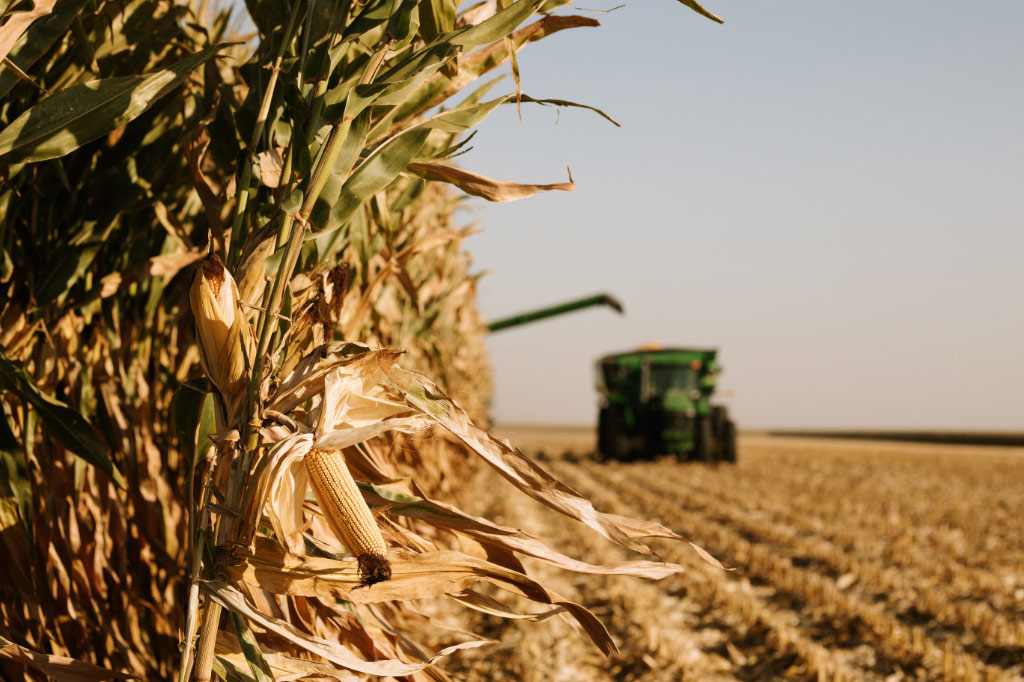
Corn planting in Nebraska typically takes place between April 15 and June 5, with the majority of the crop going in the ground between April 25 and May 20. Timing depends on soil temperature, moisture and weather conditions in any given spring.
Planting
April 15 – June 5 · peak window April 25 – May 20
When is Nebraska Corn Harvested?
Nebraska’s corn harvest generally runs from September 10 to November 25, with most acres harvested between September 30 and October 30. Some years, harvest stretches later into the fall depending on weather, crop maturity and field conditions.
Harvesting
September 10 – November 25 · peak window September 30 – October 30
Nebraska Corn Production Through the Years
Nebraska’s corn industry has grown tremendously over the decades, thanks to advances in farming practices, irrigation technology and improved corn varieties. Today, Nebraska farmers produce more corn on fewer acres than ever before, all while using fewer resources. The charts below illustrate the significant progress Nebraska corn production has made and its current standing as one of the nation’s leading corn-producing states.
Total Production
Yield Per Acre
| Year | Total Production | Bushels Per Acre Average |
|---|---|---|
| 1900 | 191,100,000 | 26 |
| 1920 | 242,891,000 | 33 |
| 1940 | 95,489,000 | 21 |
| 1960 | 333,438,000 | 51 |
| 1980 | 603,500,000 | 85 |
| 2000 | 1,014,300,000 | 126 |
| 2005 | 1,270,500,000 | 154 |
| 2010 | 1,469,100,000 | 166 |
| 2015 | 1,692,750,000 | 185 |
| 2020 | 1,790,090,000 | 181 |
| 2021 | 1,854,640,000 | 194 |
| 2022 | 1,455,300,000 | 165 |
| 2023 | 1,729,000,000 | 182 |
| 2024 | 1,802,920,000 | 188 |
| 2025 | 2,027,300,000 | 194 |
The History of Corn: Nebraska’s Rich Agricultural Roots
Corn has been grown in Nebraska for more than 1,000 years, long before Nebraska existed as a state. Originally cultivated in Mesoamerica, corn spread north into what is now Canada and reached coast to coast across North America. As corn traveled, humans and the plant adapted to one another. People shaped their culture, calendars and communities around the needs of the crop, and in return, corn provided an essential source of food and livestock feed.
Corn and Native Peoples in Nebraska
Native peoples began intensive corn cultivation in what is now Nebraska roughly 1,000 years ago, particularly along the southern and eastern parts of the state where rivers and streams created rich growing conditions. Alongside beans and squash, corn sustained tribal communities for generations. By the early 1700s, tribes including the Omaha, Pawnee and Oto were living in villages of a thousand or more people, raising corn crops that could yield around 30 bushels per acre.
The Arrival of Euro-American Farmers
With the opening of the Nebraska Territory in 1854, Euro-American farmers brought their own corn-growing traditions west in search of land of their own. They quickly discovered that eastern and southern Nebraska were prime corn country, but they also learned that Nebraska’s unique climate, rainfall, soils, weeds and pests required new seeds and new farming techniques. Through trial and error, combined with research from the growing scientific community, corn agriculture in Nebraska flourished. By the late 1870s, Nebraska corn crops were plentiful.
Corn Fuels Innovation and New Markets
As more corn was produced by fewer farmers, crop abundance pushed prices down and sparked demand for new, value-added uses. Corn proved to be an excellent livestock feed, especially for beef cattle, and by the mid-1880s, Nebraska had become a national leader in livestock feeding. By the early 20th century, farmers and entrepreneurs began searching for even more ways to use corn. As early as 1910, people were experimenting with corn-based alcohol to replace kerosene in lamps and, creatively, to power engines, the earliest beginnings of ethanol as a motor fuel.
Thank you to the Nebraska Historical Society for providing historical content.

Family Farms: The Roots of Nebraska Corn
Behind every bushel of Nebraska corn is a family farm. Many of Nebraska’s family farms trace their roots back to the Homestead Act of 1862. Today, generations later, they continue to grow, innovate and lead the way in sustainable corn production. Learn how Nebraska’s farm families are carrying on a legacy of stewardship while shaping the future of agriculture.
Related Posts
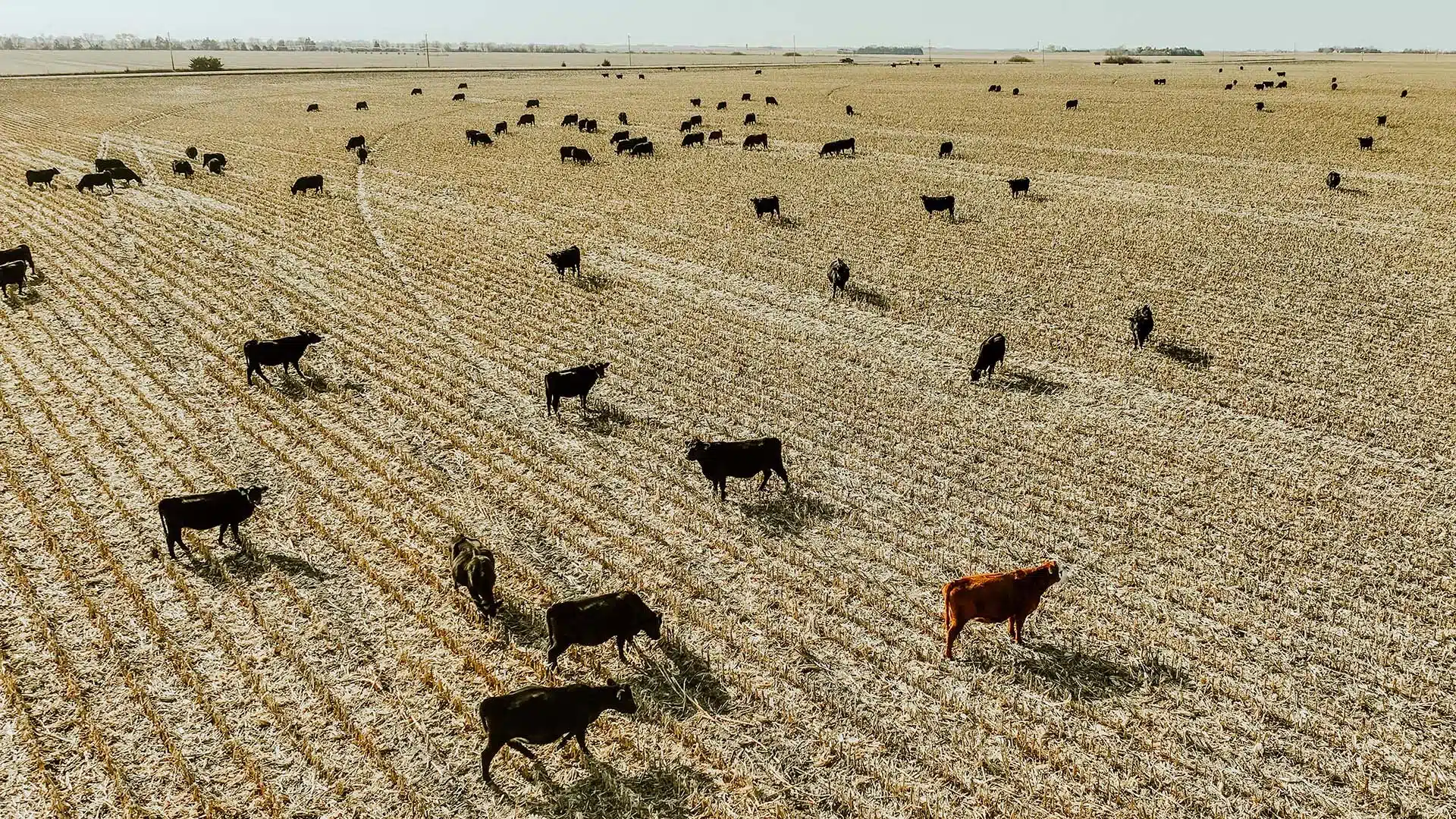
Cattle and Corn: How Nebraska's Nutrient Cycle Works Each year, freshly harvested Nebraska corn goes on a journey. A significant portion goes to nearby cattle farms, where it continues the nutrient cycle and fuels [...]
When it comes to farming, trying something new can be a tough decision. A new irrigation strategy, lower nitrogen rate or different grain marketing plan could improve profitability, but it also comes with uncertainty. [...]
Every season, Nebraska farmers make hundreds of decisions that affect their yields, their profitability and the long-term health of their land. They decide when to irrigate, how much nitrogen to apply, whether to plant [...]